

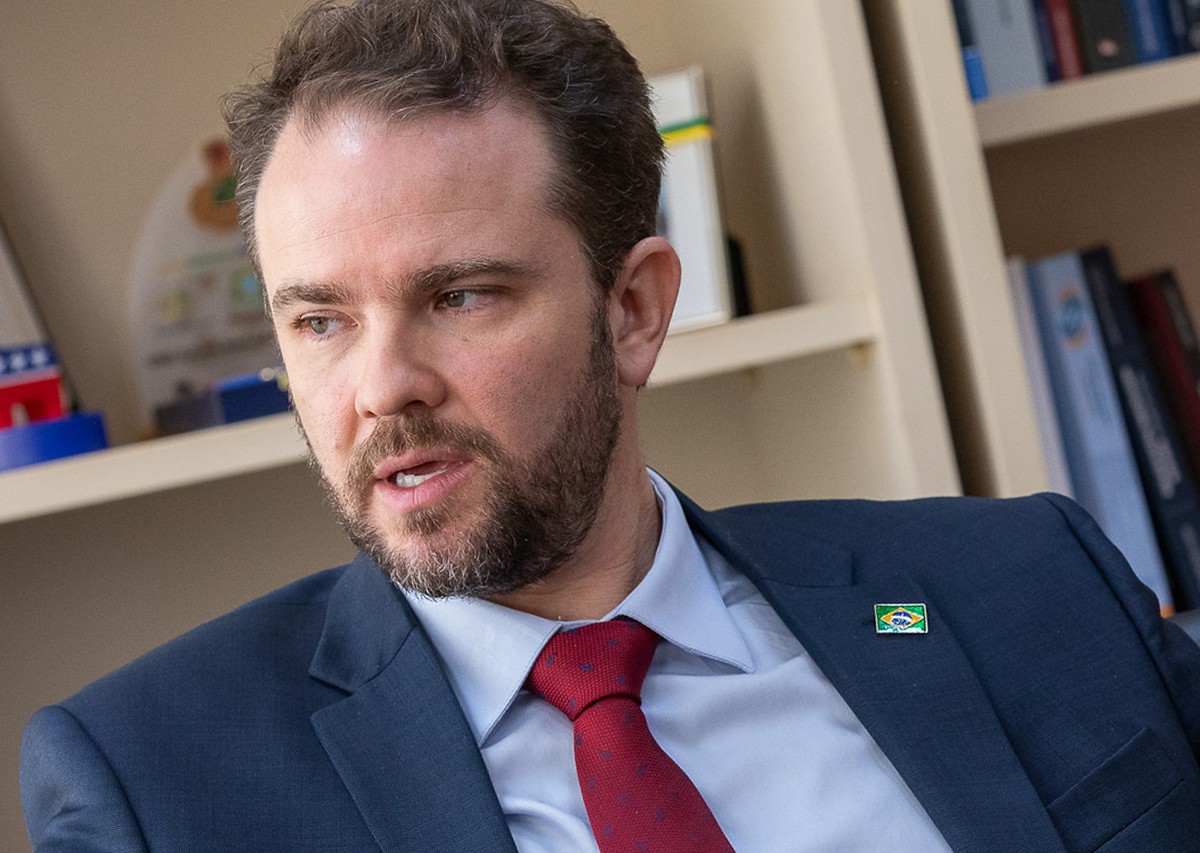
The official announcement that Dario Durigan will replace Fernando Haddad at the Ministry of Finance marked a new stage in the federal government’s economic management. The confirmation was made by President Luiz Inácio Lula da Silva during an event held in São Paulo, which brought together various political representatives, ministers, and municipal authorities.
This decision symbolizes a significant change in the Executive’s economic team, especially after the transition period initiated by Haddad, who announced his departure from the position to run for the governorship of São Paulo. Durigan’s name, until then considered Haddad’s recommendation, was officially ratified by Lula, who highlighted his confidence in the new minister’s ability to handle the country’s economic affairs.
Political Context and the Importance of Durigan’s Selection
The appointment of Dario Durigan comes at a time of intense discussions about Brazil’s economic directions, especially in the recovery scenario following years of instability and fiscal challenges. Choosing a name that is considered aligned with the government’s policies and capable of maintaining continuity of actions already undertaken is essential to ensure stability and security for the economic policies currently in place.
Furthermore, Lula’s decision to confirm Durigan as the official replacement reflects a strategy to consolidate his trusted team, demonstrating alignment with his priorities and vision for the country’s future. The expectation is that the new minister will assume his duties with a focus on maintaining sustainable growth policies, inflation control, and fiscal balance — essential aspects given the global and domestic economic landscape.
Fernando Haddad’s Farewell and His Legacy at the Ministry of Finance
At the ceremony in São Paulo, Fernando Haddad officially announced that that day would mark his farewell from the Ministry of Finance. His departure comes as he seeks to establish himself as a candidate for the Government of São Paulo, at the request of President Lula himself, reinforcing his presence in state politics and his influence on the national economic agenda.
Haddad, who has held the position since the beginning of the Lula administration, gave a detailed assessment of his management, highlighting the main achievements and advances made during his time leading the ministry. Among the key milestones, he cited the reduction in unemployment, economic growth, and the social inclusion policies implemented, which aimed to strengthen national development and promote greater fiscal justice.
Key Achievements of the Ministry of Finance Under Haddad
During his tenure, Haddad highlighted a series of actions that, according to him, contributed to the country’s progress. Among them, the implementation of measures that facilitated economic growth, the reduction of inflation, and the strengthening of the federative pact.
- Tax reform: approved by consensus, it sought to eliminate inequalities and promote fiscal justice, in addition to simplifying the national tax system.
- Income tax exemption for those earning up to R$ 5,000: a measure that benefited millions of low-income workers, promoting greater social justice and reducing the tax burden on the most vulnerable.
- Renegotiation of state debts through Propag: an action that provided financial relief to states, including São Paulo, ensuring greater fiscal stability and investment capacity.
Haddad also emphasized the role of the National Bank for Economic and Social Development (BNDES), which, under his management, more than doubled the resources allocated to states and municipalities, strengthening the government’s presence in promoting structural investments and stimulating local development.
Recognition of the Role of State and Municipal Governments
Speaking at the ceremony, Haddad emphasized that the success of his actions depended on close collaboration with state and municipal managers. He highlighted that strengthening the federative pact was fundamental to achieving the recorded advances, reinforcing that without this partnership, the positive results would not have been possible.
According to Haddad, the joint effort enabled progress in essential areas such as health, education, infrastructure, and security, in addition to consolidating an economic management approach that sought to balance growth with fiscal responsibility. He also thanked the mayors of São Paulo, governors, and other leaders for their cooperation during his tenure.
Implications of Durigan’s Appointment on Economic Policy
The appointment of Dario Durigan to the Ministry of Finance carries several implications for Brazil’s economic policy, especially considering the new minister’s profile and the country’s current economic moment. His nomination is seen as a signal of continuity, but also of possible new approaches to the conduct of fiscal and monetary policy.
Durigan, who has a background focused on financial and administrative management, is considered a name that can reinforce economic stability while also seeking to implement growth-stimulating measures. His experience in the public sector and his relationship with the current government are factors that fuel expectations of a management aligned with Lula’s guidelines.
Expectations and Challenges Ahead
Durigan is expected to face a series of challenges, including the need to maintain inflation control, balance public finances, and promote an environment conducive to private investment. Furthermore, his role will be crucial in implementing policies that can broaden economic growth, reduce inequalities, and ensure greater fiscal justice.
Another important aspect will be his ability to engage in dialogue with Congress and other institutions, seeking to pass reforms and measures that drive the country’s sustainable development. The moment calls for transparent, efficient economic management aligned with current social and political demands.
Prospects for the Future of Brazilian Economic Policy
The future of Brazil’s economic policy, under the leadership of Dario Durigan and the Lula administration, presents a range of possibilities and risks. The continuation of responsible fiscal policies, combined with growth-stimulating actions, should be a priority, especially given the international landscape of uncertainty and domestic challenges, such as post-pandemic recovery and the fight against inequalities.
Experts point out that Durigan’s management will be evaluated by his ability to balance fiscal responsibility with the need to promote investments in social areas and infrastructure. The success or failure of these actions could determine the country’s economic course in the coming years.
Prospects for Impact on the Economy and Society
- Sustainable growth: if the policies are successful, Brazil could experience a period of more consistent growth, with greater job creation and income generation.
- Financial stability: maintaining inflation control and balanced public finances will be vital to avoiding crises and ensuring market confidence.
- Reduction of inequalities: actions aimed at social inclusion and fiscal justice can contribute to a more equitable society, with greater access to opportunities.
On the other hand, the implementation of reforms and economic measures may also generate resistance and political challenges, especially in a scenario of polarization and competition for space in Congress. Balancing these factors will be decisive for the success of the Lula administration’s and Durigan’s policies in managing the Brazilian economy.
In summary, Durigan’s appointment reflects a strategy of continuity, but also of adaptation to Brazil’s new demands and challenges, seeking to reinforce economic stability and promote sustainable development in a context of global complexities.