

In recent years, the global sports landscape has undergone a profound transformation driven by advances in digital technology and artificial intelligence. What was until recently considered a predominantly physical activity and traditional entertainment has evolved into a complex system, highly integrated with the most modern technological infrastructures around the world. This process of digitalization and automation not only redefines the fan experience but also directly impacts how sporting events are organized, broadcasted, analyzed, and monetized.
The role of the technology industry in the sports arena has been radically expanded, shifting from merely sponsoring or providing equipment to taking strategic positions in operational management and fan experience. Leading companies such as Lenovo, Apple, BYD, Dell, AMD, Google, and IBM are now directly involved in event structuring and creating new interaction channels. This change represents a true revolution in how sport is consumed, organized, and valued, becoming a data and technology infrastructure that functions as an extension of the game itself.
The Evolution of Technological Infrastructure in Major Sporting Events
Over the past few years, the technological infrastructure supporting the world’s major sporting events has undergone a radical transformation. It is no longer just about broadcasting matches or races but about creating an integrated digital ecosystem capable of generating, processing, and distributing enormous amounts of data in real time. This new reality requires the implementation of high-performance systems capable of supporting the flow of thousands of terabytes of information per event, in addition to ensuring quality and speed of transmissions.
Technology companies have taken on prominent roles in structuring these operations, investing in state-of-the-art servers, edge computing, smart sensors, and predictive analytics tools. These innovations not only improve the quality of the spectacle but also provide valuable data to technical teams, federations, and sponsors, who now depend on precise information for strategies and decision-making in fractions of a second.
Examples of Implementation in Major Events
- FIFA World Cup: Mobilization of over 150 specialists and 7,500 pieces of equipment across 12 stadiums, including sensors, computer vision cameras, body tracking, and connected balls.
- European Championship: Partnerships with providers of electric recharge and mobility infrastructure, such as BYD, which supplies fleets and charging stations at stadiums.
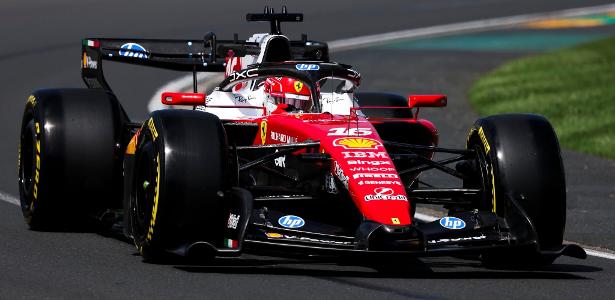
- Formula 1: Circulation of approximately 600 terabytes of data per weekend, fueling race strategies, broadcasting, and performance analysis.
These examples illustrate how technology has become a key element in the operation of sporting events, contributing to the creation of more immersive, secure, and efficient experiences. Furthermore, digital infrastructure serves as a testing platform for new technologies, which can later be applied in other industrial sectors such as mobility, public safety, and large event management.
The Role of Technology Companies in Organizing and Operating Sporting Events
Traditional marketing and sponsorship actions have given way to a more direct involvement of technology companies in the operation of large-scale sporting events. Instead of merely showcasing their brands, these companies have invested in implementing comprehensive infrastructure solutions, ranging from installing high-capacity servers to developing advanced data analysis systems.
This paradigm shift is exemplified by companies like Lenovo, which since 2022 has acted as an official technology partner in Formula 1 and, from 2025, has been elevated to Global Partner. Their involvement includes installing high-performance servers, edge computing devices, and immersion cooling solutions that reduce energy consumption and increase operational efficiency.
Similarly, FIFA contracted Lenovo to manage all technological infrastructure for the 2025 Club World Cup, as well as projects for the 2026 World Cup and the 2027 Women’s World Cup. These projects involve mobilizing thousands of pieces of equipment, operating transmission centers, and implementing data capture systems with sensors, cameras, and artificial intelligence.
Transformation in Officiating and Game Analysis
One of the most emblematic examples of technology application in sports is AI-assisted officiating. Systems like VAR (Video Assistant Referee) have incorporated real-time video analysis and automatic infringement detection, increasing decision accuracy and reducing human errors. Additionally, the use of body-worn micro-cameras and tracking sensors allows referees to access multiple angles and detailed information during matches.
Innovation also extends to the use of 3D avatars and artificial intelligence systems that assist in decision-making, promoting greater transparency and fairness in competitions. These technologies have been tested in various leagues and international events, establishing themselves as essential elements in modern sports officiating.
Transformation in Broadcast and Fan Experience
The fan experience has radically changed with advances in broadcast and interactivity technologies. Today, coverage of sporting events goes beyond simple live transmission, incorporating multiple angles, personalized feeds, augmented reality, and digital platforms that enable more active audience participation. This evolution creates a consumption journey that is continuous, multiplatform, and highly interactive.
To meet this demand, broadcasters and media platforms invest in 4K broadcasts, interactive feeds, augmented reality games, and second-screen apps. For example, Fox plans to broadcast over 300 hours of live programming during the 2026 World Cup, highlighting multi-angle coverage and immersive experiences.
Impact on Monetization and Engagement
- Advertising and sponsorships: New ways of brand integration through interactive interfaces and programmatic advertising.
- Audience engagement: Use of gamification, quizzes, and exclusive content to increase digital fan loyalty.
- Behavioral data: Real-time data collection to personalize offers and improve marketing strategies.
This combination of technology and innovation enhances the sport as an entertainment product, creating more qualified and lasting monetization opportunities. Meanwhile, the audience experiences a more complete journey that seamlessly integrates stadium, television, and mobile devices.
Sport as a Laboratory for High-Performance Technologies
A less known but highly important aspect is that sport has become a true testing ground for new AI, high-performance computing, and automation technologies. Companies from sectors such as heavy industry, autonomous mobility, public safety, and large event management use sports competitions as a testing field for innovative solutions.
In Ducati, for example, AI and high-density computing are used to virtually test parts and extreme scenarios before mass production. These simulations help reduce costs, improve safety, and accelerate new product development. In Formula 1, Lenovo employs its competitive environment as a validation platform for critical workloads such as real-time data analysis, efficient cooling systems, and advanced energy solutions.
Furthermore, the technology developed for sports has potential applications in areas like data center infrastructure, autonomous mobility, large event security, and crowd management. This demonstrates that sport has shifted from merely entertainment to a field of technological innovation impacting various industrial sectors.
Applications in Security, Mobility, and Event Management
- Security systems: Real-time monitoring, predictive analysis, and crowd management.
- Autonomous mobility: Development of high-precision vehicles and drones tested in sports environments.
- Critical infrastructure: Efficient cooling of data centers, energy systems, and high-speed connectivity.
These applications reinforce the importance of sport as a platform for innovation, capable of accelerating the adoption of cutting-edge technologies in sectors essential to modern society. Thus, each competition transforms not only into a sporting spectacle but also into a high-impact technological experimentation field.