

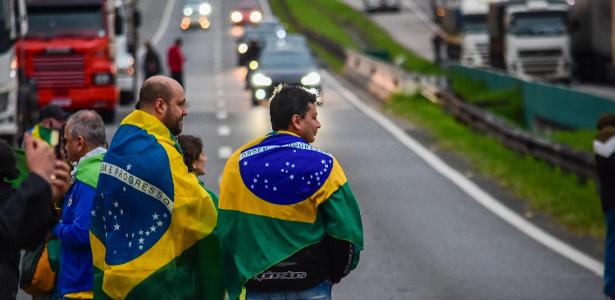
Lula Government Suspects Political Motivation Behind Strike Threat
Members of the federal government have begun to harbor suspicions about Bolsonarist influence in the truckers’ strike threats that have gained momentum in recent weeks. According to government sources, the main evidence fueling this suspicion is the speed with which organized groups reacted to discussions about the increase in diesel prices, suggesting prior and coordinated articulation that goes beyond a spontaneous response from the category. The swiftness of the mobilization caught the attention of members from different ministries, who began closely monitoring the unfolding of negotiations.
Government intermediaries reported that they encountered immediate resistance when attempting to open dialogue channels with category leaders to discuss possible measures capable of containing the rise in fuel prices and, consequently, defusing the strike threat. According to these accounts, even when faced with concrete proposals presented by government representatives, the receptiveness was significantly low, which reinforced the perception that other interests were at play beyond the economic demands of the road freight transport sector.
Members of different ministerial departments stated that, although truckers’ associations avoid explicitly mentioning any political motivation in their public statements, the opposition bias toward the government was, in the words of the government officials themselves, “clearly evident” in the negotiations. Executive representatives admit they do not have precise information about the existence of a formal parliamentary or party leadership coordinating the movements, but maintain that many political actors are deliberately fueling the strike in pursuit of electoral dividends for the right-wing field.
History of Strikes and the Recent Political Context
PT members within the government recall that the last major strike threat by truckers occurred at a moment of enormous political tension in the country: shortly after President Luiz Inácio Lula da Silva’s victory at the polls in October 2022. At the end of that month, independent truckers went as far as blocking highways in 25 states and the Federal District, in a movement that, in the PT camp’s assessment, had as its backdrop the questioning of the electoral results. The temporal coincidence between Jair Bolsonaro’s electoral defeat and the beginning of road blockades reinforced, for government officials, the reading that the category had been politically instrumentalized.
In private, government members go as far as accusing some truckers of using threats as a tool of pressure and blackmail, a practice that, according to them, would not be new even for former President Jair Bolsonaro. In April 2021, the category threatened the then head of the Executive, whom they historically supported, also due to the rise in diesel prices, demonstrating that the sector’s economic demands can override political alliances when transporters’ financial interests are at stake. Curiously, part of that same group later joined the convoys in support of the former president during the September 7, 2021 demonstrations, highlighting the complexity of the relationship between the category and the conservative political field.
Truckers as a Relevant Political Force on the National Scene
Over recent years, Brazilian truckers have consolidated themselves as a politically significant group on the national scene, with real capacity to pressure governments and influence public debate. This transformation was driven, to a large extent, by the major strikes that marked the country’s recent history, especially the 2018 strike during the Michel Temer government, which brought Brazil to a standstill for more than ten days and caused supply shortages in various regions. The economic and social impact of that episode demonstrated the category’s power to exert pressure and paved the way for its growing politicization.
A concrete example of this transformation is the trajectory of federal congressman Zé Trovão (PL-SC), an emblematic figure of the truckers’ movement and the Bolsonarist field. He was elected to the National Congress in 2022 after gaining national prominence precisely through his leading role in the 2018 and 2021 strikes, using the visibility gained on the roads as a political springboard to achieve a parliamentary mandate. The case of Zé Trovão illustrates how the category’s mobilization can be converted into electoral political capital, which, in the federal government’s view, would explain the interest of opposition sectors in keeping the pot boiling.
The relationship between independent freight carriers and the conservative political field is marked by a complex dynamic that mixes legitimate economic interests with ideological alliances and electoral opportunism. Political analysts point out that the category represents a strategic electorate for the Brazilian right, composed largely of self-employed workers who value discourses of less state regulation and greater economic freedom. This political identity, however, does not prevent truckers from pressuring any government when their financial earnings are threatened, regardless of the partisan affiliation of whoever holds power.
The Role of Zé Trovão and Other Political Actors in the Mobilization
The figure of congressman Zé Trovão exemplifies how the boundary between union leadership and partisan political action can be thin in the world of road transport. His election in 2022 was widely interpreted as a direct result of his prominence in previous strikes, which creates a structural incentive for sector leaders to keep the movement active and visible, even when conditions for effective negotiation are already in place. For the government, this perverse incentive is one of the factors that makes it difficult to quickly resolve tensions with the category.
- The 2018 strike, during the Temer government, was the turning point that transformed truckers into a national political force
- The October 2022 strike was interpreted by the PT as a movement contesting the electoral result
- Congressman Zé Trovão (PL-SC) was elected in 2022 based on the visibility gained from previous strikes
- In April 2021, the category went as far as threatening Bolsonaro himself, whom they supported, over the rise in diesel prices
- Some of the same truckers who threatened Bolsonaro joined the September 7 convoys that same year
Category Leaders Deny Political Nature and Demand Concrete Action
On the other side of the debate, the main leaders of the truckers’ movement categorically reject the government’s thesis of political instrumentalization. Wallace Landim, known as Chorão, considered the main leader in favor of the strike, was emphatic in stating that the strike threat “has no political motivation whatsoever.” In an interview on the Poder e Mercado program on Canal UOL, Chorão defended the strictly economic and sectoral nature of the movement, distancing himself from any partisan or ideological ties.
The president of Abrava, the Brazilian Association of Motor Vehicle Drivers, stated that his historical stance is one of non-involvement in political agendas, regardless of which government is in power. “I am someone who does not participate in any political agenda, neither to defend government A or B,” Chorão declared, recalling that after the 2018 strike, several attempts to call new strikes were made by other groups, and he always positioned himself against them when he identified political motivation behind the movements. According to him, his work is focused exclusively on defending the independent freight carrier, the so-called TAC.
Chorão acknowledged that the rise in diesel prices has roots in international factors beyond the direct control of the Brazilian government, but was emphatic in demanding domestic measures to mitigate the impacts on workers in the sector. “It is the responsibility of the current government to try to bring some measures to mitigate these issues of high fuel prices here in the country,” the leader stated, making it clear that regardless of the structural causes of the problem, pressure on the Executive would continue as long as concrete solutions were not presented and implemented.
The Historical Demands of Independent Carriers
The demands of independent truckers are concentrated in a set of recurring claims over the years, with emphasis on issues related to diesel prices, minimum freight rates, and general working conditions in the sector. Among the main points raised by the category in the most recent negotiations, the following stand out:
- Reduction of diesel prices at refineries and fuel stations throughout the country
- Effective compliance with the minimum freight rate table by contracting companies
- Government measures to increase domestic fuel supply and reduce dependence on imports
- Exemption or reduction of federal and state taxes levied on diesel
- Mechanisms for oversight and punishment of companies that fail to comply with sector regulations
Government’s Package of Measures to Contain Diesel Price Hike and Prevent Strike
Faced with growing pressure, the federal government announced a set of measures aimed at reducing the price of diesel and thereby removing the main fuel from the strike threat. The Ministry of Transport announced that companies that fail to comply with the minimum freight rate table may lose their license to contract and carry out transportation in Brazil — one of the most urgent and recurring demands of the category, explicitly cited by Chorão himself in his interview with UOL. The measure was received as a positive signal by some leaders, although it was not sufficient to completely end the threats.
In the week prior to the most recent announcements, the Lula government zeroed out the PIS and Cofins rates levied on the price of diesel, in a federal tax relief measure that should contribute to reducing fuel costs throughout the distribution chain. In addition, the Executive promised to grant fuel subsidies to producers and announced the taxation of oil exports as a strategy to increase domestic supply of the product, reducing pressure on domestic prices. With this combination of changes, the government calculated that the price of diesel should fall by R$ 0.64 per liter at the refinery, a significant relief for transporters.
The package of measures was complemented by the Ministry of Finance, which announced the release of R$ 3 billion so that states can zero out the ICMS on imported diesel. This initiative represents a coordination between the federal government and state entities to broaden the scope of the tax relief and ensure that the cost reduction effectively reaches the end consumer — in this case, the truckers themselves and transport companies. The measure was presented as part of a coordinated and comprehensive effort to demonstrate that the government is willing to act concretely to resolve the problem.
Expected Impact of the Measures on the Final Fuel Price
The set of interventions announced by the federal government involves different spheres of the diesel tax and production chain, with expected impacts at different stages of the process. The combination of measures can be summarized as follows:
- Zeroing of PIS and Cofins on diesel — federal tax relief measure with a direct impact on the refinery price
- Subsidy on fuel for producers — incentive to increase domestic production and supply
- Taxation of oil exports — strategy to redirect the product to the domestic market
- Release of R$ 3 billion for states to zero out ICMS on imported diesel
- Enforcement of compliance with the minimum freight rate table with risk of license revocation for violators
Political Tension Remains and Outcome Is Still Uncertain
Despite the package of measures announced by the government, tension surrounding the possible truckers’ strike remains high. The scenario is marked by mutual distrust between the federal Executive and part of the category’s leadership, with each side interpreting the other’s actions through a lens of suspicion. For the government, the threats have political motivation that goes beyond legitimate economic demands; for the leaders, the government has still not done enough to resolve the structural problem of diesel prices.
The episode exposes a strategic vulnerability of the Lula government in the face of a group that has demonstrated, at different historical moments, a real capacity to pressure and destabilize federal administrations, regardless of their political orientation. The Executive’s ability to separate the category’s legitimate economic demands from attempts to politically instrumentalize the movement will be decisive for the outcome of this crisis. The government will need to demonstrate that the announced measures have a real and perceptible impact on transporters’ pockets in order to deflate the appeal of the more radical leaders.
For political analysts, the episode also reveals how truckers have consolidated their role as a first-tier political actor in contemporary Brazil, with the capacity to influence both left-wing and right-wing governments. Managing this relationship — which simultaneously involves economic negotiation, political dispute, and public communication — represents one of the most complex challenges faced by the Lula government in the field of relations with organized professional categories. The outcome of the ongoing negotiations will have implications that go beyond the price of diesel, directly touching on the governability capacity of the current government and the political dynamics taking shape ahead of the next elections.