

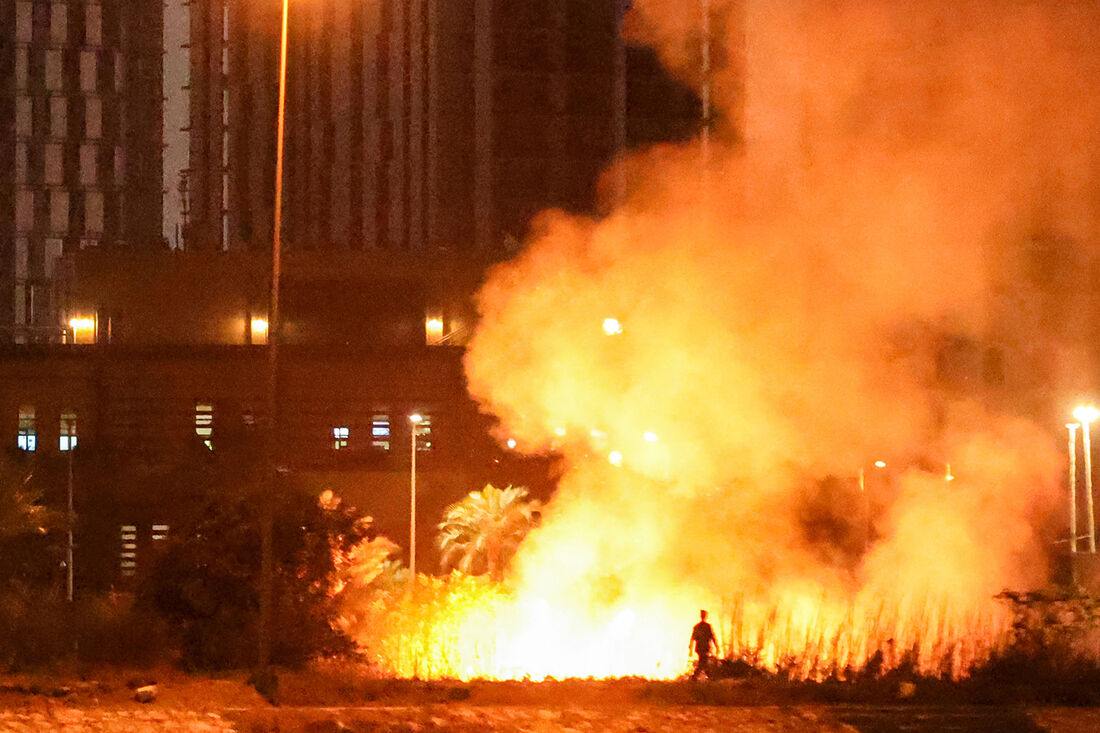
Iran confirmed the death of Ali Larijani, described by international reporting as a top figure linked to the country’s national security leadership, after an overnight airstrike attributed to Israel. The killing signals a shift from tactical targets to the decision-making core, raising the odds of retaliation, wider regional spillover, and renewed pressure on markets, governments, and strategic routes.
Iran Confirms Larijani’s Death as the Conflict Enters a New Phase
Israel said it eliminated Ali Larijani, described in international reporting as the head of Iran’s top security body, in a nighttime airstrike. Iran later confirmed Larijani’s death, turning what would already be a serious wartime event into a strategic marker: the conflict is no longer confined to battlefield tactics and infrastructure pressure. It is now moving decisively into the realm of command, leadership, and decision-making.
The confirmation matters because leadership strikes alter incentives. They compress timelines, raise the emotional stakes, and narrow the political space for restraint. When a high-level figure is killed, the question is rarely whether there will be a response. The question becomes how, when, and where the response will land, and whether the answer will escalate the conflict into a broader regional war.
According to The Guardian, Larijani was killed in an airstrike attributed to Israel, and the reporting indicated that relatives and members of his security detail were also hit. Analysts widely interpret the incident as a dual shock: it can disrupt security coordination in Tehran and, at the same time, broadcast a message that even high-protection circles are not beyond reach. In a conflict already charged with symbolism, that message is itself a weapon.
Why this moment is different
Wars often begin with a focus on tactical advantages: equipment, supply lines, and operational positions. But when strikes move up the hierarchy, the conflict changes character. The target is no longer just capability. The target is cohesion, confidence, and the continuity of decision-making. That shift can make the next steps harder to predict, because leadership dynamics can trigger pressure for rapid retaliation, internal political hardening, and expanded target sets.
Iran’s confirmation of Larijani’s death is therefore not a footnote. It is a signal that the war has reached deeper into the state’s core, increasing the likelihood of a response that could affect not only Israel, but also regional partners, strategic routes, and global markets.
Who Was Larijani and Why His Death Carries Strategic Weight
Larijani has been described by international observers as a figure with influence across political and security spheres. In systems with multiple power centers, individuals who can operate across institutions often serve two critical roles: they help build internal consensus, and they function as coordination nodes in crises. Remove that node abruptly, and the system must reorganize under pressure, often with reduced tolerance for ambiguity.
According to The Guardian, Larijani held prominent positions at pivotal moments, with a history of influence in both political direction and state strategy. This profile helps explain why his death resonates beyond a single operation. It may trigger a rapid rebalancing inside Iran’s security and political architecture, including a stronger voice for hardline factions and more militarized decision-making.
Operationally, the loss of a central security figure can create a short window of uncertainty while replacements assume routines, review protocols, and rebuild decision flows. In wartime, even brief uncertainty can be interpreted as vulnerability. That perception alone can shape adversary calculations and accelerate the tempo of further strikes.
Leadership removal and the risk of miscalculation
Leadership strikes can backfire in opposite directions. They may weaken coordination, but they can also unify internal factions around a retaliatory narrative. They can intimidate leadership, but they can also harden it. In high-stakes conflicts, actions intended to shorten a war sometimes extend it by locking both sides into escalatory logic.
This is why the Larijani case is particularly sensitive. It is not only about one person. It is about the war crossing a threshold into the politics of leadership survival, where pride, deterrence, and internal legitimacy become inseparable from military planning.
The Strike as a Message: Reach, Intelligence, and Psychological Pressure
A claimed strike of this magnitude is designed to speak to three audiences at once: the opponent’s leadership, the attacker’s domestic public, and the international community. For an adversary’s leadership, the message is blunt: there is reach, intelligence access, and precision. For a domestic audience, the strike is framed as competence and strategic superiority. For the outside world, it functions as a warning that the conflict has entered a higher-voltage phase, with broader spillover risk.
According to The Guardian, Israel also said it eliminated the commander of Iran’s Basij paramilitary force in another strike. The combination of political and security targets strengthens the interpretation that the campaign aims to degrade Iran’s internal mobilization capacity and disrupt the state’s command structure. In that framing, the battlefield is not only geographic. It is institutional.
Why psychological pressure matters in modern conflict
In wars where both sides fight not only for territory but for deterrence and narrative dominance, psychological pressure becomes a strategy. Leadership targets can introduce fear, distrust, and internal blame, especially when the strike suggests infiltration, compromised security procedures, or intelligence failures. These effects can force internal crackdowns, create paranoia within institutions, and push leadership to demonstrate strength quickly, sometimes at the expense of long-term stability.
For the international community, the psychological dimension is also relevant. A conflict that begins to resemble a contest of decapitation strikes often triggers alarm in capitals that worry about sudden escalation spirals. When leaders become targets, diplomacy becomes more difficult, because the injured party faces political costs for restraint.
Iran’s Response Dilemma: Retaliation, Timing, and Spillover Risk
When leadership is hit, retaliation becomes the expected default. The real uncertainty lies in form and timing. A rapid, visible response can satisfy domestic demands for deterrence but can also open the door to larger counterstrikes. A calibrated response may be more sustainable, but it risks being framed internally as insufficient. In conflicts with strong symbolism, that internal pressure can be decisive.
The Associated Press has described, in the context of the current conflict environment, missile and drone attacks following the killing of Iranian leaders, with ripple effects that extend beyond Israel and touch neighboring regions. This underscores a central concern for governments and markets: the response may not remain strictly bilateral. It can reach zones where bases, strategic routes, and multi-national interests intersect.
Spillover is the mechanism that turns a conflict into a global risk event. It is not only about the number of strikes. It is about the widening radius of uncertainty, which drives up transport costs, marine insurance premiums, and the perceived vulnerability of critical infrastructure.
Three paths Iran could take
- Immediate and intense retaliation: a rapid response aimed at reasserting deterrence, with a higher risk of an uncontrolled cycle.
- Calibrated and distributed retaliation: layered pressure through selective strikes, indirect actions, and strategic messaging, raising incident risk across multiple fronts.
- Tactical pause and internal reorganization: tightening internal security first, then striking later, reducing short-term escalation but increasing domestic pressure for action.
Each path carries risk. The difference is how the risk is distributed across time and geography. In a region packed with energy corridors and military assets, distributed risk can still become explosive through a single misread signal.
A “Decapitation Phase”: When the Target Becomes Command
The phrase is harsh, but it captures why this moment is so serious. When a war begins to focus on leadership elimination, it tends to become more unpredictable. The attacker’s goal is typically to reduce coordination capacity, weaken internal cohesion, and in some cases force political change. But the effect can be inverted. Leadership strikes can produce unity, intensify internal repression, strengthen hardline narratives, and increase willingness to accept higher costs for retaliation.
The Guardian described the death of Larijani as among the most significant losses in the current phase of the conflict. If so, the implication is that the war’s center of gravity is moving closer to the heart of the Iranian state. That shift increases the probability of rapid, high-risk decisions and reduces the space for quiet de-escalation.
Why escalation becomes harder to stop
In leadership-focused conflict, both sides can become trapped in a logic where restraint is interpreted as weakness. The attacked side fears domestic backlash and loss of deterrence. The attacking side may interpret limited response as permission to strike again. That feedback loop can quickly outpace diplomatic efforts, because diplomacy often requires time, and leadership strikes reduce available time.
As a result, the conflict’s next stage may depend less on public statements and more on quiet operational decisions, including how quickly Iran reorganizes security procedures, how it signals deterrence, and how other regional actors attempt to buffer their own vulnerability.
Regional Impact: Gulf States, Strategic Routes, and Energy Risk
Whenever Iran and Israel reach peak tension, the broader Middle East enters high alert. Gulf states watch closely for signs that retaliation could approach their territory, energy infrastructure, or shipping lanes. In the current environment, even limited incidents can amplify fear across the region because the Gulf concentrates critical energy corridors.
The Associated Press has reported on attacks and tensions that have touched the broader Gulf environment in related contexts, showing how quickly the confrontation can expand beyond one axis. Even when intercepts prevent damage, repeated attempts alone increase insecurity and raise risk premiums.
The global sensitivity is clear: the Gulf’s energy corridors and shipping routes are not only regional assets. They are global supply arteries. That is why perceived risk can lift prices and disrupt supply chains even without a total stoppage. The market does not need certainty of disruption. It only needs a higher probability of it.
Why markets react even without confirmed supply cuts
Energy markets are forward-looking. They price expected risk, not only observed damage. When a leadership strike suggests escalation, traders anticipate tighter logistics, higher insurance premiums, and a higher chance of constraints on strategic routes. Those expectations move prices faster than physical disruption does. In turn, higher energy costs can spread into shipping, manufacturing, and consumer inflation across multiple regions.
The Internal Front in Iran: Security Tightening and Narrative Warfare
Leadership-targeting attacks also have a domestic effect. When senior figures are hit, states often respond internally with intensified security measures, investigations into breaches, and greater control of information. A strike that reaches high-level circles typically raises questions about infiltration, compromised procedures, and intelligence failures.
That can lead to rapid changes in protocols: tighter movement security for officials, stronger protection around strategic facilities, and expanded counterintelligence activity. It can also intensify internal crackdowns on suspected collaborators, which further hardens the political environment.
At the same time, narrative warfare accelerates. The government will present the attack as external aggression, seeking national unity and legitimacy. Opponents may frame it as evidence of regime weakness. In wartime, these narratives rarely remain only rhetorical. They influence decisions and can accelerate escalatory moves.
Why narrative matters for operational choices
When leaders believe they must demonstrate resolve to maintain internal legitimacy, they may choose responses that are riskier than what pure military calculation would recommend. Conversely, when leaders fear further strikes, they may prioritize survival and internal control. Both choices can widen conflict risk, because they reduce flexibility and increase the likelihood of actions designed for signaling rather than stability.
International Pressure: Diplomacy Struggles as the Stakes Rise
As conflicts intensify, diplomats race to find brakes. But leadership strikes tend to narrow diplomatic space because incentives change. The attacked side feels compelled to respond. The attacker may see limited response as advantage. Meanwhile, states that prefer distance are pushed to take positions, either due to alliances or because they must protect routes and economic interests.
The Associated Press has described the broader environment as one where multiple fronts, navigation risk, and further retaliation remain plausible. In that context, the confirmed death of Larijani acts as additional fuel in an already combustible landscape.
Why this can become a prolonged regional crisis
Once leadership becomes a target category, conflicts often expand in scope and duration. Each side may feel obligated to demonstrate that it can strike back at the heart of the other. That raises the risk of cross-border incidents and the involvement of additional actors, whether through direct participation or through the cascading need to protect assets and routes.
For global audiences, the practical takeaway is not to treat this as a single headline. The Larijani killing is a structural event that may reshape the conflict’s trajectory. The next major development may not be announced as escalation. It may appear first as a shift in posture: higher alert levels, tightened shipping warnings, new defensive deployments, or sudden spikes in risk premiums.
Three Scenarios for the Next Few Days
Scenario 1: Rapid and forceful retaliation
Iran responds quickly with visible force to reassert deterrence and satisfy domestic demands. This path raises the risk of a rapid strike-counterstrike cycle that becomes harder to contain and pulls in wider regional targets.
Scenario 2: Calibrated response across multiple channels
Iran chooses layered pressure: selective strikes, indirect actions, and strategic signaling. This may be designed to avoid total war, but it increases the risk of incidents across multiple fronts, especially around strategic routes and allied assets.
Scenario 3: Tactical pause to reorganize
Iran prioritizes internal security reorganization and leadership stabilization before a larger response. This reduces immediate escalation risk but may intensify internal political pressure for a stronger later action.
Times Qwerty Editorial Perspective
Times Qwerty assesses that Iran’s confirmation of Ali Larijani’s death marks a qualitative escalation. When a war begins to strike the command center, the probability of impulsive decisions rises and the space for retreat shrinks. Rather than reducing conflict, leadership-targeting blows can feed a cycle of vengeance, internal hardening, and expanding combat boundaries.
For readers, the key is to separate verified facts from propaganda noise. The central fact here is Iran’s confirmation of the death and the attribution of the strike to Israel as reported by international outlets. What comes next, retaliation pathways, regional expansion, and economic shock, depends on the next set of decisions and on whether regional powers can prevent the conflict from crossing points of no return.