

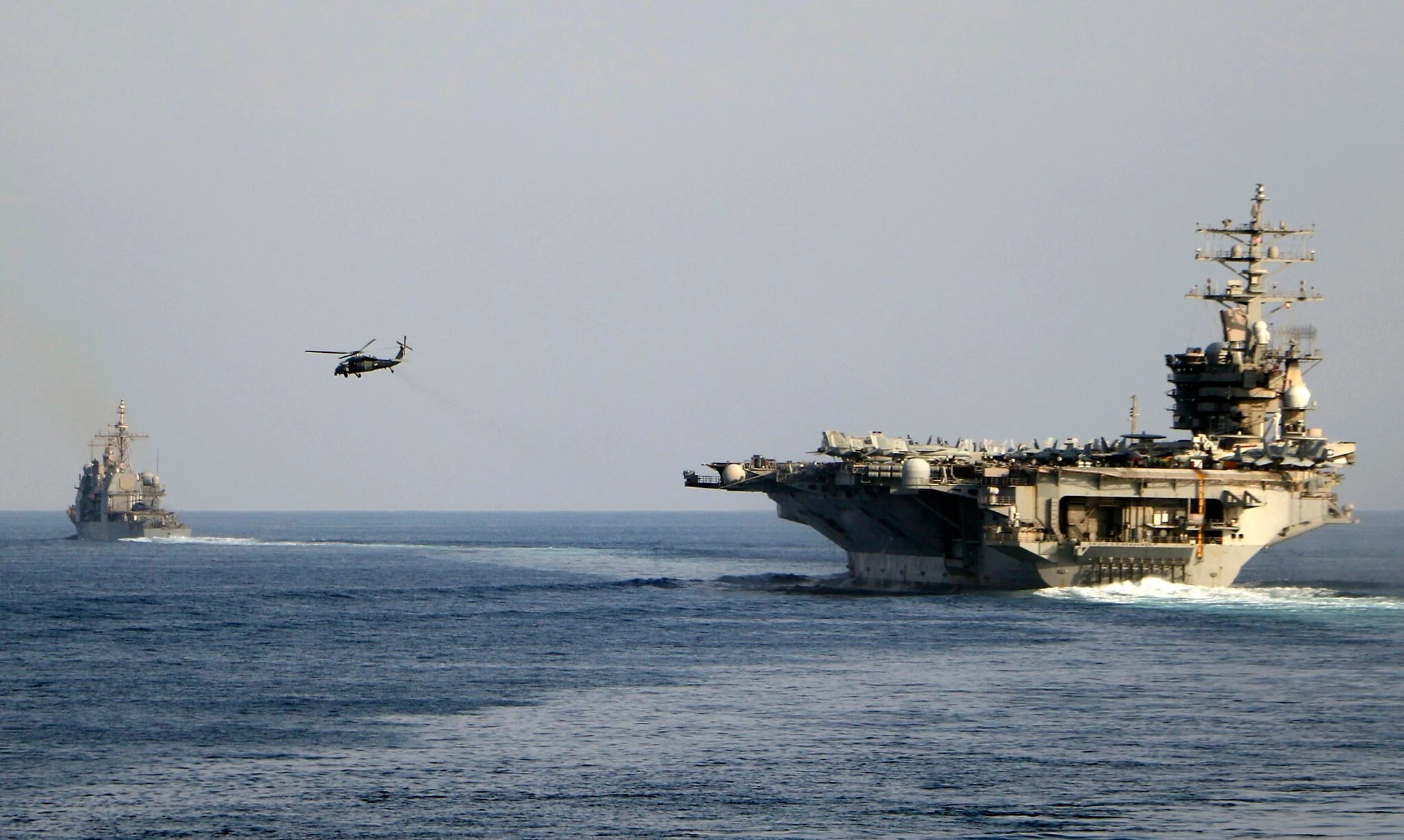
Roughly 90 vessels, including oil tankers, crossed the Strait of Hormuz in early March even as the Iran war tightened control over the waterway. Maritime tracking firms cited by major outlets report that Iran kept exporting millions of barrels, mostly to China, while insurers, unions and regulators warned crews to avoid the area amid fatalities, “dark” transits and surging war risk costs.
Hormuz in wartime: how “closed” became “selectively open”
In the global energy system, few places matter more than the Strait of Hormuz. It is a narrow maritime chokepoint linking the Persian Gulf to the Gulf of Oman and the wider ocean, and it sits at the intersection of geopolitics, oil, shipping insurance and national security. That is why fresh maritime data suggesting that about 90 ships crossed Hormuz between March 1 and March 15, 2026, despite the war involving Iran and an “effective closure” narrative, has become one of the defining storylines of this conflict.
According to AP News, the crossings included oil tankers and other merchant vessels. The reporting, citing maritime intelligence providers such as Lloyd’s List Intelligence and analytics firm Kpler, describes a tense reality in which passage has not been uniformly blocked, but has become conditional, risky and shaped by diplomacy, shifting enforcement and the tactical interests of the parties involved.
This is the core paradox now driving the crisis: the strait can be functionally constrained without being physically sealed. In wartime, a chokepoint does not need a formal blockade to stop normal commerce. It only needs enough uncertainty, enough military threat, and enough financial risk to make shipping companies and insurers decide that transit is no longer worth it. And yet, as the latest data indicates, some ships still move, creating what many analysts are calling a “selective corridor” rather than an open sea lane.
What the “90 ships” figure actually signals
The headline number is attention grabbing, but the deeper significance lies in what it implies about control, leverage and market psychology. If merchant ships can cross, it suggests that Iran and other actors are calibrating pressure rather than pushing the nuclear option of an absolute stoppage. That calibration can serve multiple objectives at once: keep Iran’s own exports moving, maintain bargaining power, and send a message that the strait can be tightened or loosened depending on the political and military moment.
AP News reported that Iran continued exporting oil in large volumes in early March, with a substantial share going to China, based on tracking and trade analytics. The report also described “dark” transits, a term used for voyages in which ships reduce or manipulate public tracking signals. That practice has long been associated with sanction evasion and shadow fleet operations, but the war environment adds a new layer: concealment becomes both a sanctions tool and a survival tactic.
Iran’s exports under pressure: the oil still moving
The most consequential detail in the shipping story is that Iran’s oil exports did not vanish when the crisis intensified. Instead, they appear to have continued, though under heavier risk, higher costs and more complicated routing. AP News reported that Iran exported more than 16 million barrels since early March, citing the same maritime intelligence sources. If accurate, that figure underscores a strategic reality: Iran’s ability to sustain exports, even partially, helps it finance state operations and maintain a key source of national resilience during conflict.
For energy markets, the question is not just how many barrels leave Iran, but how predictable and insurable the route remains. Predictability drives pricing. Even small disruptions can trigger large price swings if traders believe the route could collapse tomorrow. That is why the shipping numbers became so important. They are not just logistics. They are signals that markets trade on, because they indicate whether the war is turning into a full energy supply shock or a managed crisis that still allows some flow.
China’s role and the new geometry of sanctions
Reporting from AP News emphasized that a large portion of Iran-linked flows were headed to China. That matters because it reflects a long-running pattern in which Iranian exports find buyers willing to accept higher reputational and legal complexity. In wartime, that pattern becomes even more sensitive, because every tanker movement is read as a political act by other states and a potential flashpoint for enforcement or retaliation.
The war has also blurred the line between economic policy and military strategy. When a conflict intersects with sanctions, shipping becomes a battlefield of paperwork, flags, insurance clauses and port access. A tanker does not need to be hit by a missile to be neutralized. It can be sidelined by denied insurance, blocked financing, or legal risk that makes charterers walk away. That is why the insurance story has become as important as the naval story.
The human cost at sea: seafarers caught in the middle
The conflict around Hormuz is not only an energy story. It is a labor and human safety story. Maritime crews are civilian workers who cannot simply “work from home” when the sea lane becomes a war zone. In early March, the International Maritime Organization issued unusually direct statements warning that attacks on civilian shipping are never justified and urging maximum caution, including avoiding the area where possible.
In a statement dated March 1, 2026, the International Maritime Organization said freedom of navigation is a fundamental principle of international maritime law and called for protection of civilian mariners. In a follow-up statement dated March 6, 2026, the International Maritime Organization said at least four seafarers reportedly died in a deadly attack and warned of large numbers of stranded seafarers under heightened risk. The details described by the organization highlight a reality that gets lost in oil price headlines: when shipping lanes become contested, crews can be trapped aboard vessels for extended periods, under extreme stress and uncertainty.
From “High Risk Area” to “Warlike Operations Area”
Labor organizations also moved to formally classify the area as dangerous. The International Transport Workers’ Federation and the Joint Negotiating Group announced a designation of the Strait of Hormuz and surrounding waters as a High Risk Area, and later upgraded the classification to a Warlike Operations Area after reviews of conditions and reports of attacks on commercial vessels. Those designations are not symbolic. They can activate contractual protections, higher compensation, and the right for seafarers to refuse entry into certain zones under specific agreements.
To the wider public, that bureaucratic language may sound distant. But in shipping, these labels shape behavior. They influence whether crews will agree to sail, whether shipowners can staff vessels, and whether the cost of labor rises because workers require hazard pay. In a chokepoint like Hormuz, even modest changes in crew availability can have large ripple effects across schedules and supply chains.
Insurance, not missiles, can close a sea lane
One of the strongest signals that Hormuz is under severe strain is not a single dramatic incident, but the response of insurers. When insurers conclude that the risk is unquantifiable, ships stop moving, or they move only under extraordinary premiums and conditions. In early March, The Guardian reported that major mutual marine insurers were cancelling or restricting war risk cover for ships operating in the region, with changes taking effect in early March.
This matters because marine insurance is the invisible infrastructure of global trade. A container ship or oil tanker without appropriate cover may be barred from ports, refused by charterers, or rejected by financiers. In plain terms, insurance can do what a navy might struggle to do: reduce traffic dramatically without firing a shot. War risk premiums, cancellation clauses and exclusions can turn the sea into an economic no-go zone.
Why insurers’ decisions ripple across prices
Insurance costs feed directly into shipping rates. Higher rates feed into import costs. And import costs feed into inflation. Even if oil continues to flow, the cost of moving it can surge. The result is that consumers and businesses far from the Gulf pay the bill through higher fuel costs, higher transport surcharges, and more expensive goods.
The Financial Times described the shipping market environment around the Gulf as chaotic, with rerouting, surcharges and dislocations that hit supply chains. When routes are disrupted, cargo may be dropped at alternative ports, or ships may wait offshore for days. Those delays translate into real losses, especially for perishable goods and time-sensitive industrial components.
“Dark” transits and the shadow fleet: the war accelerates a hidden system
Any discussion of Iran-linked shipping in 2026 quickly arrives at the idea of “dark” transits. These are voyages where tracking signals are reduced, manipulated or inconsistently broadcast. The practice has been linked to sanction evasion in multiple contexts, but the war adds another dimension: operational concealment becomes a defense mechanism.
According to AP News, some vessels have used dark or obscured movement patterns to bypass scrutiny, while data providers track flows through a combination of signal data and trade analytics. For regulators, this creates a dilemma. Aggressive enforcement can raise costs and reduce flows, but it can also increase tensions and risk escalation at sea. Looser enforcement can reduce energy price pressure in the short term, but it may be seen as politically permissive.
How “selective passage” works in practice
In a classic blockade, passage is denied by force. In a selective corridor, passage is shaped by layers of risk, permission and informal rules. Ships that are seen as aligned, tolerated or diplomatically covered may pass. Others may face higher odds of harassment, delay, or prohibitive insurance costs. This system does not require a public declaration. It only requires that enough shipowners believe that certain flags, cargoes or routes are safer than others.
The result is a fragmented map of maritime access. It resembles a patchwork of “green lanes” and “red lanes” that can change quickly as the conflict evolves. That instability is itself a strategic tool, because it forces shipping companies to negotiate and adapt, while maintaining maximum uncertainty for rivals.
Why Hormuz is the world’s most dangerous bottleneck in this war
Hormuz has always been a chokepoint, but in wartime it becomes an amplifier. A chokepoint concentrates risk. A single incident can affect dozens of ships waiting nearby. A single insurance decision can reroute entire fleets. A single strike can convince the market that the worst-case scenario is suddenly plausible.
Even the discussion of “closure” can move prices. If traders believe the strait is effectively closed, they will price in scarcity and risk. If they see evidence of continued passage, they may ease the premium slightly, but not remove it. That is why the figure of 90 ships crossing matters. It does not mean normality. It means the situation is in a tense middle state: not fully shut, not safely open.
Freedom of navigation and the legal battleground
The International Maritime Organization framed freedom of navigation as a core principle that must be respected. In practice, war challenges that principle through threat, fear, and the ambiguity of what is considered legitimate military targeting. Civilian shipping becomes vulnerable in multiple ways: direct attack, misidentification, collateral damage, and the spillover of military actions near sea lanes.
From a legal standpoint, the stakes extend beyond the current war. If civilian shipping becomes normalized as leverage, it sets a precedent that could reshape global maritime norms. That is why international bodies and labor groups have been so vocal. Their statements are attempts to draw lines in a conflict environment where lines blur quickly.
The second-order shock: global shipping, not just oil
Oil is the headline driver, but the conflict’s shipping impact goes beyond energy. The Financial Times described disruptions across container shipping, with major carriers rerouting or suspending bookings, and costs rising sharply on some lanes due to war risk insurance, fuel surcharges and congestion at alternative ports.
When the Gulf becomes unstable, it affects trade corridors for consumer goods, industrial inputs, and food. Manufacturers face delays. Retailers face inventory uncertainty. Importers face higher fees. Exporters face fewer ships and longer transit times. In a global economy that has only partly recovered from previous supply chain shocks, a major Gulf disruption can reintroduce the kind of unpredictability that businesses dread.
Why this can feel worse than a one-time blockade
A clean blockade is catastrophic, but it is also clear. Markets hate clarity when it is bad, but they hate uncertainty even more. The current situation is uncertain. It is a mix of partial passage, selective corridors, sporadic attacks and shifting insurance terms. For supply chains, that is a nightmare because planning becomes impossible. A shipment might arrive in 10 days, or it might be stuck for 30.
That uncertainty becomes a tax on trade. It forces companies to hold more inventory, pay more for transport, and accept delays as normal. Over time, it can influence investment decisions and the geography of manufacturing, as firms seek routes and suppliers less exposed to chokepoints.
What to watch next: the indicators that matter
If you are trying to understand where the Hormuz story is headed, focus on measurable indicators rather than dramatic rhetoric. Here are the signals most likely to define the next phase:
- Traffic volume and composition: whether the number of crossings rises or falls, and how many are oil tankers.
- Insurance posture: whether war risk cover returns, tightens further, or becomes conditional for certain flags and cargoes.
- Confirmed incidents: attacks on merchant vessels, fatalities, injuries and official confirmations by flag states or regulators.
- Port behavior: whether ports in the region face congestion, cancellations or diversions.
- Diplomatic signals: whether regional actors announce escorted corridors, ceasefire talks or de-escalation measures.
The International Maritime Organization has already urged shipping companies to rely on verified sources and avoid disinformation. That warning itself is significant, because information warfare often intensifies around chokepoints, with rumors and fabricated alerts causing panic, rerouting and costly decisions.
Times Qwerty editorial perspective: a corridor built on fear
The Strait of Hormuz is now operating as a corridor built on fear, calculation and selective access. The data cited by AP News, referencing maritime intelligence such as Lloyd’s List Intelligence and Kpler, suggests that ships can still cross, but only under a regime where normal commercial logic has been replaced by wartime risk management.
At the same time, the warnings from the International Maritime Organization and the escalated designations from the International Transport Workers’ Federation underline a moral and operational truth: civilian crews are paying an outsized price for a conflict they did not choose. When seafarers die in attacks on merchant vessels, the issue is no longer abstract geopolitics. It is human life at the sharp end of global trade.
The broader danger is that “selective openness” becomes a stable model for coercion. If a state can keep its exports moving while throttling rivals’ traffic, it creates an incentive to weaponize chokepoints without declaring blockades. That is a world where shipping becomes permanently more expensive, supply chains more fragile, and civilians more exposed.
Times Qwerty will continue tracking the verified maritime indicators that matter: traffic counts, insurance terms, confirmed incidents, and official regulatory statements. In this war, the next escalation may not be announced in speeches. It may show up first as silence on ship transponders and a sudden spike in war risk premiums.